Introduction
Crossword puzzles are not just simple word games; they are intellectual challenges that test both your vocabulary and your ability to think creatively. Every clue in a crossword grid is a puzzle in itself, often offering a play on words or an alternate definition of a seemingly ordinary phrase. An example of this is the crossword clue “head outside.” At first glance, it may seem straightforward, but as many solvers know, crossword clues rarely follow the obvious path. This article will explore how the “head outside” crossword clue works, why it’s so effective, and what it can teach us about crossword puzzles in general.
What Is the “Head Outside” Crossword Clue?
The phrase “head outside” may initially seem simple, almost too easy, for experienced crossword solvers. After all, the words are basic: “head” generally refers to the part of the body or a leader, and “outside” suggests being outdoors or beyond the confines of something. However, as with most crossword clues, the real answer comes from thinking beyond these simple definitions.
In the context of crossword puzzles, the phrase “head outside” can be an example of a misdirection, a common technique used by puzzle creators. Instead of relying on the most obvious definitions of the words, solvers are encouraged to explore secondary or more obscure meanings. The clue may be guiding you toward an entirely different interpretation that requires some knowledge of slang, history, or other nuanced definitions.
A Closer Look at the Words: “Head” and “Outside”
To fully understand why the “head outside” clue works, let’s break down the individual words.
Head:
In everyday language, “head” typically refers to the top part of the body, the leader of a group, or the action of moving in a particular direction, as in “heading out.”
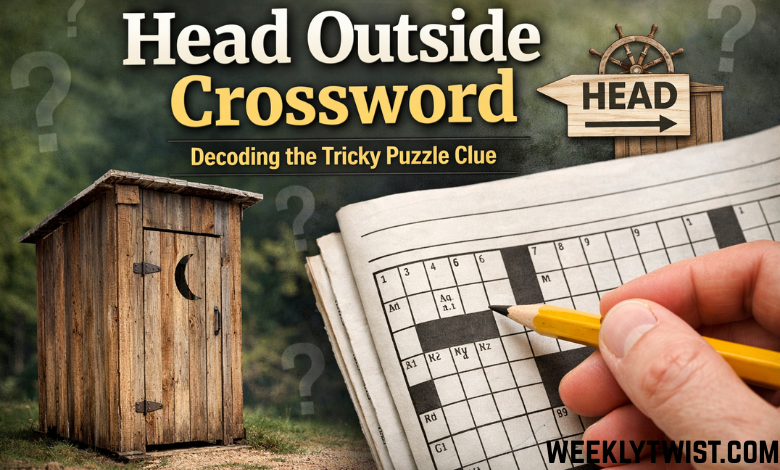
However, in the world of crosswords, “head” can also have a more specific, historical meaning. In nautical slang, for example, “head” can refer to a toilet, especially one on a ship or a secluded area, commonly called an “outhouse.” This usage is less common in everyday conversation today, but it’s still alive and well in crossword puzzles.
Outside:
The word “outside” in most contexts refers to the area beyond a building or structure. It’s a straightforward term, but in crossword puzzles, it can suggest a physical location or, sometimes, a more figurative meaning.
In this case, “outside” indicates a place that is outdoors, separate from indoor spaces like a home or building. It may point to an outdoor toilet, further hinting that the answer isn’t as simple as “heading out” or “going outside.”
Why This Clue Works So Well
The combination of “head” and “outside” can lead the solver down an entirely different path than what they might expect. While one might first think of a leader or boss heading outdoors, the clue’s real meaning points to something much more practical and historical—an outdoor toilet. This twist in definition exemplifies the beauty of crossword puzzles: They often force solvers to use lateral thinking to arrive at the answer.
Once you interpret “head” as referring to a toilet (a “head” on a ship, for example), and “outside” as indicating that it’s not indoors, the answer becomes clear. The phrase “head outside” hints at an “outhouse,” a simple structure that was once more common in rural areas or older homes before modern plumbing systems became widespread.
The satisfaction of solving a clue like this comes from the realization that the answer was hidden in plain sight, relying on a more obscure and historically significant definition of the words.
The Role of Misdirection in Crossword Puzzles
Misdirection is one of the key strategies used by crossword creators to keep solvers engaged. A good crossword clue doesn’t just test your knowledge; it challenges your assumptions. In the case of “head outside,” the solver is initially misled into thinking about more modern or obvious interpretations of the words, like someone “heading outside” or a “head” as in a leader. It’s only by stepping outside of these conventional meanings that the solver finds the correct answer.
This kind of misdirection isn’t meant to be unfair—it’s a test of flexibility and curiosity. By pushing solvers to think in different ways, crossword puzzles help expand how we approach language and problem-solving.
Why Clues Like “Head Outside” Are Effective
The effectiveness of a crossword clue like “head outside” lies in its economy of words and its ability to provoke thought. The clue is concise, yet it packs in layers of meaning. It’s not about throwing obscure references at the solver; it’s about prompting them to reconsider what they already know.
Crossword creators use a range of techniques to keep their clues fresh and engaging:
Multiple Meanings: Clues rarely rely on just one definition of a word. Instead, they tap into secondary meanings, slang, or older definitions that add depth to the puzzle. In the case of “head outside,” the solver must recall the historical meaning of “head” as a toilet.
Cultural Context: Many crossword clues tap into cultural memory. The use of “head” to refer to a toilet is a reference to language and terminology that may no longer be in widespread use but is still familiar to many solvers.
Clean Logic: Once the solver realizes the correct definition of the words, everything clicks into place. The clue makes perfect sense, and the answer feels clean and satisfying.
How Crosswords Encourage Flexibility in Thinking
One of the best aspects of solving crosswords is that it encourages solvers to think flexibly. Rather than approaching each clue with the assumption that it follows the most obvious path, solvers must be willing to entertain alternate meanings and historical references. It’s this mental flexibility that makes crossword puzzles such a great exercise for the mind.
For example, encountering the “head outside” clue teaches solvers to consider older meanings of words that they may not use regularly in conversation. This exercise is valuable not only for solving crossword puzzles but for expanding one’s understanding of language and its evolution over time.
Tips for Solving Tricky Crossword Clues Like “Head Outside”
Even experienced solvers can get stuck on a clue like “head outside,” especially when it seems too simple. Here are a few practical strategies to help you tackle tricky clues:
Question the Obvious: If the first definition that comes to mind doesn’t fit, try to think of an alternative meaning. Clues often require you to look beyond the most obvious answer.
Think Literally: Sometimes, clues point to a physical location, not an abstrat concept. Ask yourself what objects or structures could be outdoors.
Consider Historical or Slang Meanings: Crosswords often use older or regional slang, so be open to definitions that aren’t in common use today.
Let Crossing Letters Help: Filling in letters from intersecting clues can help push your thinking in the right direction.
Take a Break: If you’re stuck, stepping away from the puzzle Take a pause: Walking away from the puzzle for a short while can refresh your mind and help the solution become clearer. a few minutes can reset your perspective and make the answer seem clearer.
These strategies not only help with solving specific clues but can be applied across puzzles, making each one a little easier than the last.
Why “Head Outside” and Similar Clues Keep Crosswords Relevant
Crosswords have been around for over a century, and they show no signs of fading into obscurity. In a world filled with fast-paced content, crosswords encourage us to slow down and think. The beauty of clues like “head outside” is that they challenge our brains to engage with language in a deeper, more thoughtful way.
Even though many of the terms used in crosswords may seem outdated or obscure, they preserve linguistic history. A younger solver may encounter a term like “head” used to refer to an outdoor toilet, and an older solver may enjoy seeing familiar language used in a new context. This bridging of generations keeps crosswords culturally relevant and ensures that the puzzles remain a source of enjoyment and learning for people of all ages.
Conclusion
The “head outside” crossword clue is a perfect example of how puzzles combine language, history, and logic into a few simple words. While the clue itself might seem easy at first, it rewards the solver with a moment of insight when they realize the true meaning of the words. This type of clue is effective because it invites the solver to think differently, stretching their understanding of language and challenging them to make connections that might not be immediately obvious.
Crossword puzzles are more than just games—they are a reflection of the richness and flexibility of language. They invite solvers to think critically, question assumptions, and discover new meanings for words. Whether you’re a seasoned solver or a beginner, clues like “head outside” offer a satisfying glimpse into the fascinating world of wordplay and linguistic exploration.
FAQS
1. What does the clue “head outside” mean in a crossword?
It refers to an outdoor toilet, using “head” as an older slang term for a toilet.
2. Why do crossword clues use alternate meanings of common words?
Crosswords often rely on misdirection, encouraging solvers to consider secondary, historical, or regional meanings for words.
3. How can I solve tricky crossword clues like “head outside”?
Question obvious meanings, consider slang, and let crossing letters guide your thinking.
4. Is the term “head” commonly used in crosswords to mean a toilet?
Yes, it’s an older nautical term for a toilet, often used in crossword puzzles for its historical significance.
5. Why are clues like “head outside” effective in crossword puzzles?
They encourage flexibility in thinking and the exploration of alternative definitions, making the solving process more engaging.